Introspective tarot guide
When you go through a block, a difficult decision or a season of doubt, you rarely look for a prediction. You look to understand yourself better. This guide gathers common questions we ask ourselves, with reflection paths inspired by the practice of tarot.
Note: in actual practice, cards are drawn at random. The cards mentioned here are not answers, just images that often resonate with these themes, like doorways into a topic.
How do I work on my self-confidence?
Self-confidence cannot be decreed. It is built slowly, from small experiences in which you allow yourself to be yourself without judgment. If you lack confidence, it is rarely because you are "less" than someone else. It is more often that an inner voice taught you, at some point, to doubt your worth.
Working on confidence begins by observing that voice. What does it tell you when you hesitate? Whose voice is it, really? Often it is the echo of an old criticism, not a truth about who you are today. You can choose to stop listening to it on autopilot.
Confidence does not mean the absence of doubt. You can tremble and still move forward. Every small step you take while staying faithful to your values nourishes that confidence, even if no one else sees it. The card of Strength, in tarot, illustrates this idea: real power is not domination, it is a clear-eyed gentleness toward your own vulnerable parts.
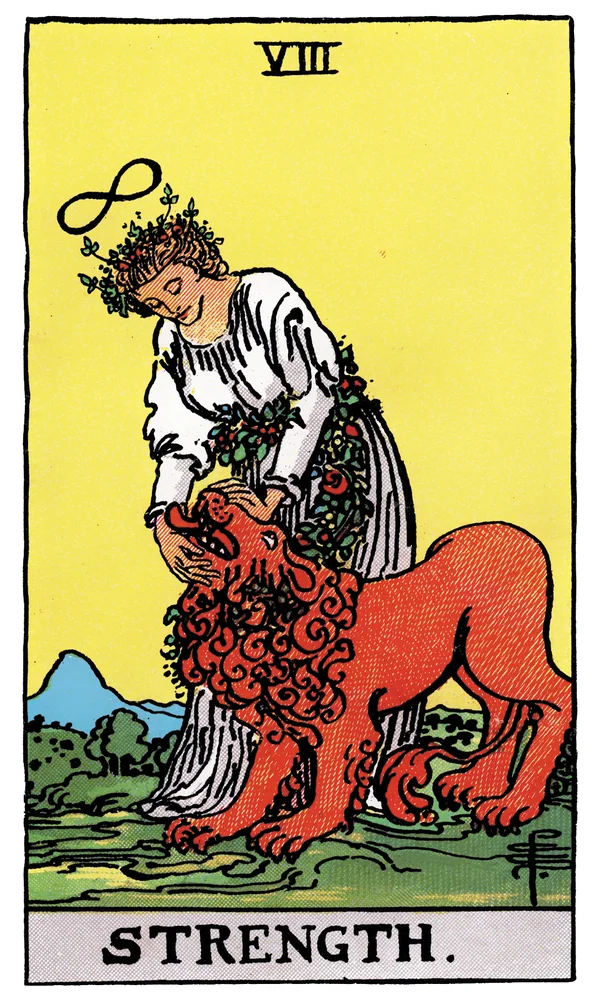 A card that often resonates with this question: Strength →
 How do I know what I really feel?
Many people live alongside their emotions without realizing it. Not out of bad faith: we often learn very early to rationalize, to talk ourselves out of things, to minimize what is happening inside. The result is that we confuse what we should feel with what we actually feel.
To reconnect with your inner experience, you might begin by slowing down. Sit for a few minutes, without your phone, without distraction, and notice what is there in your body: a knot in your stomach, tension in your shoulders, an unexplained tiredness. Emotions don't only pass through the head, they take root in the body. That is often where they let themselves be recognized first.
Then try to name what arises without judging it. Not "I shouldn't feel this way", but "here, I feel sad" or "I feel angry". Putting the right word on an emotion already makes it less overwhelming. You don't need to understand everything right away: welcoming is enough as a first step.
The tarot can support this inner listening: the card of The High Priestess evokes that quiet knowing that lives in you, what you sense before you can even explain it. It invites you to trust that discreet voice that often knows what you need before your mind has put it into words.
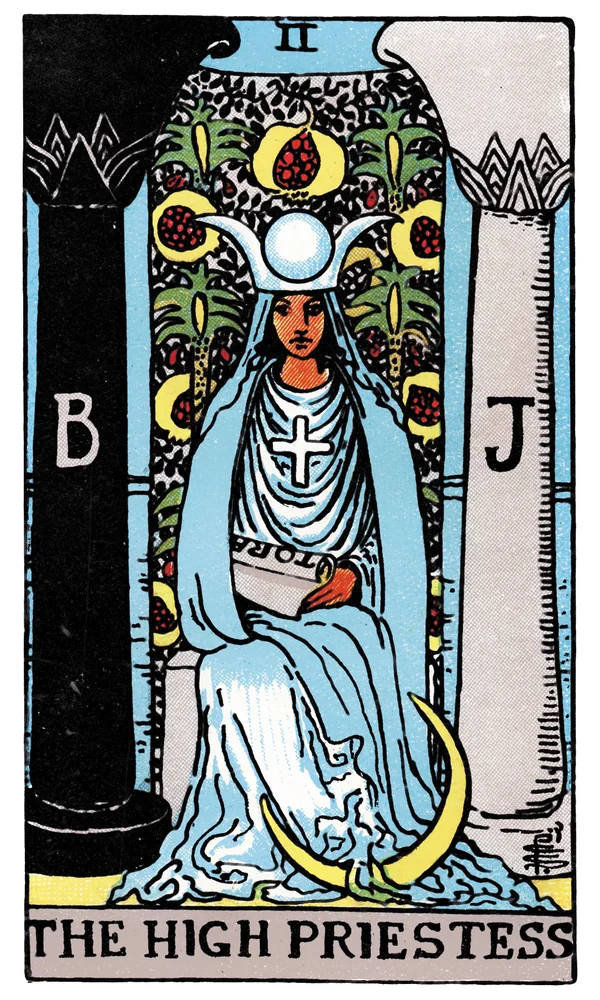 A card that often resonates with this question: The High Priestess →
 How do I get to know myself better?
Knowing yourself is not summing yourself up in a few personality traits or a quiz result. It is a movement, not a label. You change, you evolve, and what was true of you five years ago may no longer be true today. Self-knowledge asks you to come back to yourself regularly, with curiosity rather than a verdict.
A useful angle is to observe your reactions rather than your intentions. We readily tell ourselves a flattering version of who we are, but it is our angers, our enthusiasms, our withdrawals that say the most. When something touches you strongly, ask yourself: why this one, why now? The answer will often teach you something you couldn't put into words.
Knowing yourself also asks for silence. Not necessarily formal meditation, just moments when you are neither producing nor consuming. A walk, a commute without a podcast, a pause. It is in those spaces that the real questions rise to the surface.
In tarot, the card of The Hermit evokes this idea: the chosen withdrawal, the lamp you carry yourself to explore your own inner territory. Not a flight from the world, more a chosen time to hear what the surrounding noise tends to cover up.
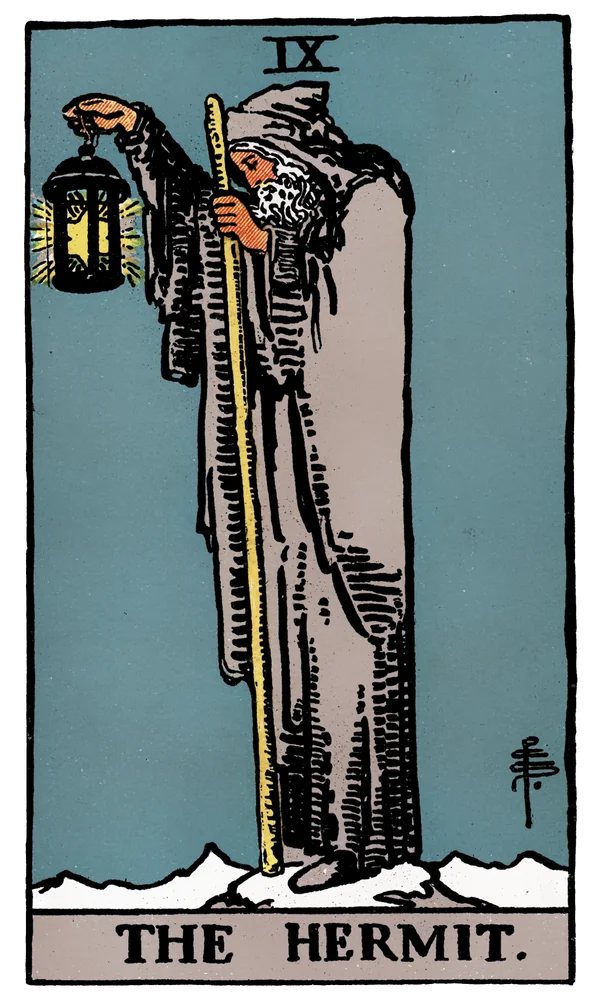 A card that often resonates with this question: The Hermit →
 How do I make a difficult decision?
A difficult decision is rarely difficult because it is hard to analyze. It is difficult because it touches several things that matter to you at the same time, and no option lets you preserve everything. It is not a problem to solve, it is a trade-off to own.
Before searching for the "right" answer, try to clarify what is really at stake. Not only the practical consequences, but also the values: your freedom, your security, your loyalty to someone, your need for coherence. Often the discomfort comes from a quiet conflict between two values, not from missing information. Putting words on that conflict already brings a lot of light.
Ask yourself too which decision you might regret most in ten years: trying and failing, or never trying? Fear of error paralyzes, but not deciding is also a choice, often more costly than getting it wrong. You can always adjust along the way. Very few doors truly close for good.
The card of Justice, in tarot, evokes this idea: weighing honestly what is at stake, without lying to yourself, without being swept away by an immediate emotion. Not a cold justice, more a quiet lucidity that looks at the situation as it is, and accepts the choice that emerges.
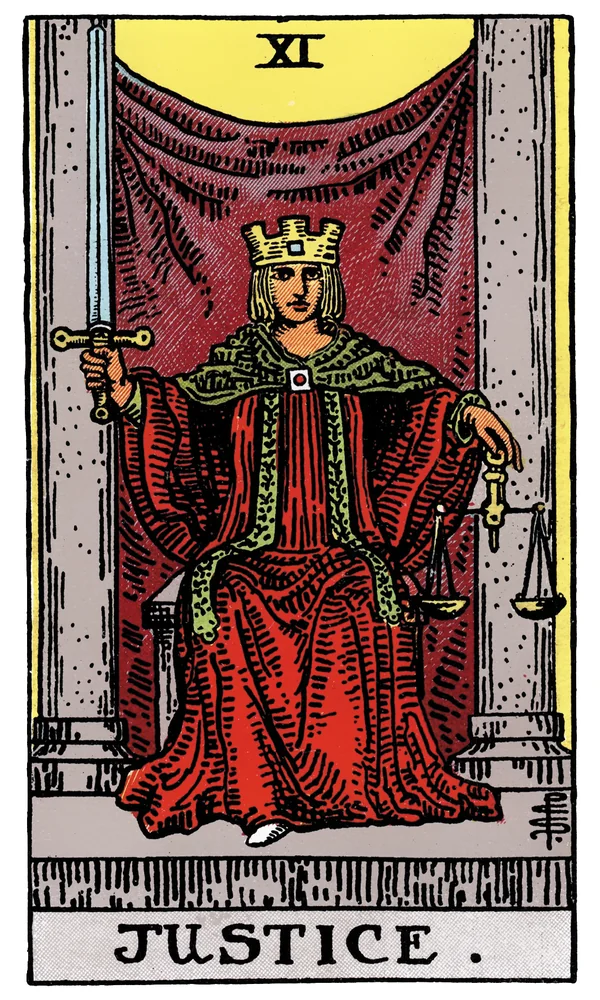 A card that often resonates with this question: Justice →
 How do I get out of an emotional block?
An emotional block is rarely an overflow that spills over. It is usually the opposite: something has frozen, it no longer circulates. You sense there is an emotion there, but it stays trapped, and you with it. You go around in circles, you ruminate, you feel like a stranger in your own life.
The first thing to understand is that a block protects, in its own way. It was useful at some point, to keep you from being overwhelmed by a pain too big to bear. Forcing it open abruptly often creates more chaos. The work is to approach it gently, recognize that it is there, and ask yourself: what am I protecting myself from, exactly?
Sometimes what unblocks things is a change of frame, a break in the daily routine. An honest conversation that has been avoided, a decision long postponed, an environment you finally accept to leave. These moments feel scary because they shake what you know, but they also free up energy that had been confiscated.
The card of The Tower, in tarot, evokes this dynamic: the collapse of structures that were holding only out of habit. It is not a catastrophe, even if it looks like one in the moment. It is often what had to happen for life to flow again. What falls is what could no longer carry you.
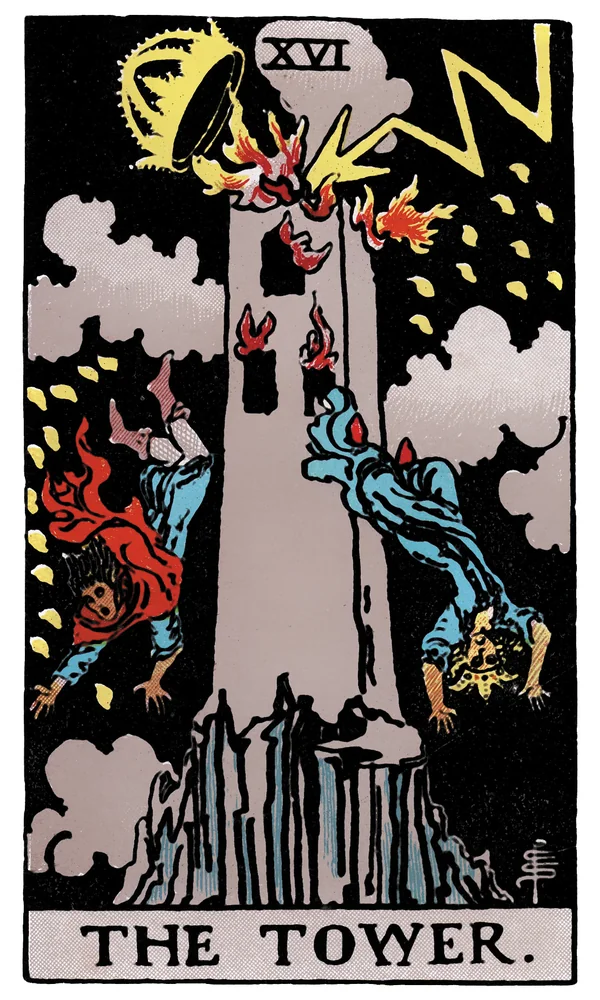 A card that often resonates with this question: The Tower →
 Why do I sabotage my relationships?
Relational sabotage is almost never conscious. No one wakes up saying "I'm going to destroy what's good for me". And yet it happens: we pull away when someone gets close, we pick a fight when everything is fine, we get attached to unavailable people. It is not malice, it is often an old fear that speaks louder than the desire for connection.
To understand this mechanism, you might need to look back. Which relationships taught you, as a child or teenager, that attachment was risky? Many sabotage patterns are protective strategies learned very early: if I leave first, I won't be abandoned; if I stay imperfect in their eyes, they can't really disappoint me. These strategies were useful at some point, and they keep running in a loop even when they no longer serve you.
Stepping out of sabotage is not about forcing yourself to trust all at once. It is more about spotting the precise moment when the urge to flee rises, and choosing not to act on it right away. Stay there, feel what's happening, and observe. Real connection is built in those moments when you choose to stay, despite the discomfort.
The card of The Devil, in tarot, evokes this idea of bonds we keep tying ourselves without realizing it. Not a fate, more a loop whose two ends you are holding. Recognizing the loop is already the beginning of being able to undo it.
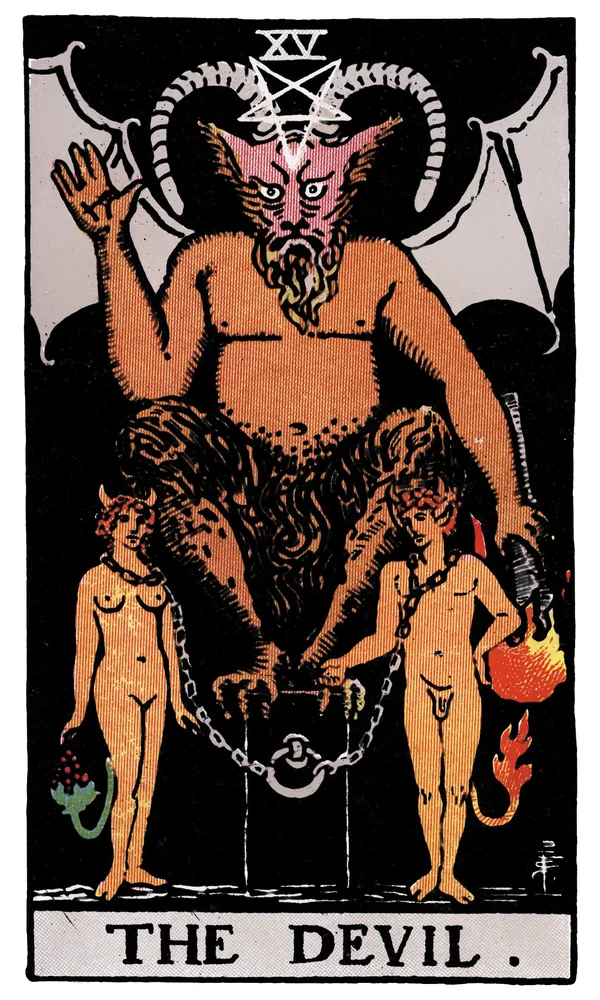 A card that often resonates with this question: The Devil →
 How do I deal with my fears?
We would love to make our fears disappear. Defeat them, overcome them, be done with them. The thing is, fear doesn't let itself be chased away. The more you fight against it, the more it clings. It is not an enemy to defeat, it is more of a signal to listen to.
Fear is often trying to tell you something true: you are approaching a threshold, a change, a risk that matters. The problem is not that it exists, it is that it takes the wheel. You can feel fear without letting it decide for you. That is a big difference: hearing it as information, not as an instruction.
A useful question is to ask yourself what exactly you are afraid of. Not on the surface, deeper. Often, behind an immediate fear (speaking in public, making a decision, committing), there is an older one: being judged, being abandoned, not being good enough. Naming that deeper fear takes part of its power away. As long as it stays blurry, it is in charge.
You can also accept moving forward with fear, without waiting for it to disappear. Courage is not the absence of fear, it is doing what matters in spite of it. The card of The Moon, in tarot, evokes that inner territory where fears often take huge proportions at night, and more measured ones at dawn. A lot of what frightens you changes its face when you simply allow yourself to come closer to look at it.
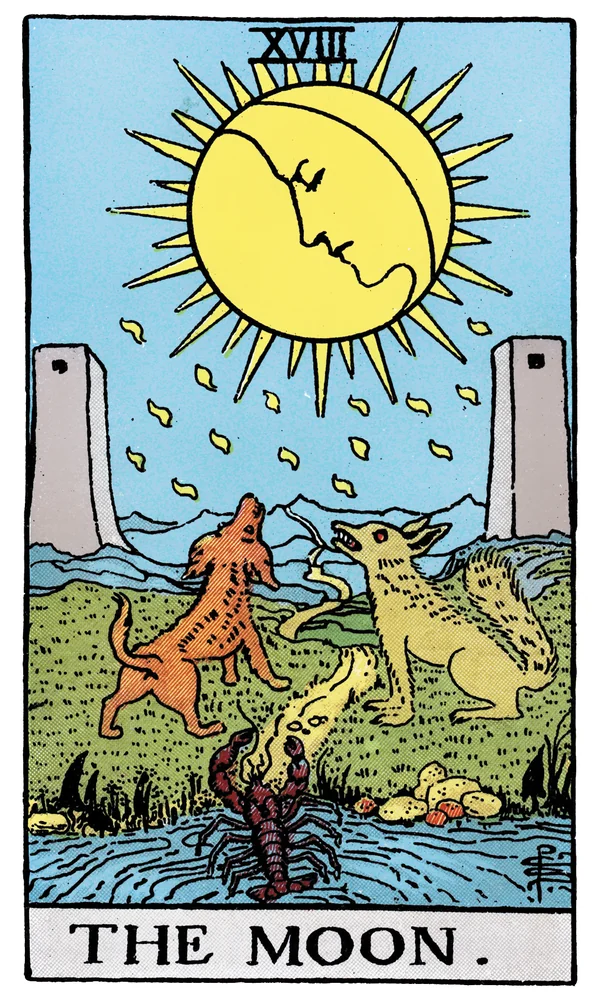 A card that often resonates with this question: The Moon →
 How do I understand my repeating patterns?
Everyone has patterns that come back. The same kinds of relationships, the same blocks at work, the same emotions that overflow at the wrong moment. It is not a sign that you are flawed, it is just that your inner system keeps trying, over and over, to resolve something that has not yet found its place.
To understand a pattern, you first have to recognize it as one. As long as you experience each situation as an isolated event ("this time it's different", "I just got unlucky"), you don't see the thread. Take some time to reread the similar episodes of your life: what comes back? What role do you play each time? Which emotion always ends up showing up? When the pattern becomes visible, it also starts to lose its grip.
Many repeating patterns come from old learnings we never really questioned. We unconsciously replay family dynamics, we try to mend wounds with the wrong people, we keep confirming beliefs we built as children. It is not your fault, but it is your responsibility today to observe and choose something else.
The card of the Wheel of Fortune, in tarot, evokes this idea of cycles that turn. As long as you stay on the edge, you follow the motion. But you can also place yourself at the center: that fixed point from which you watch the wheel turn without being swept up by it. That is where awareness begins to transform the pattern.
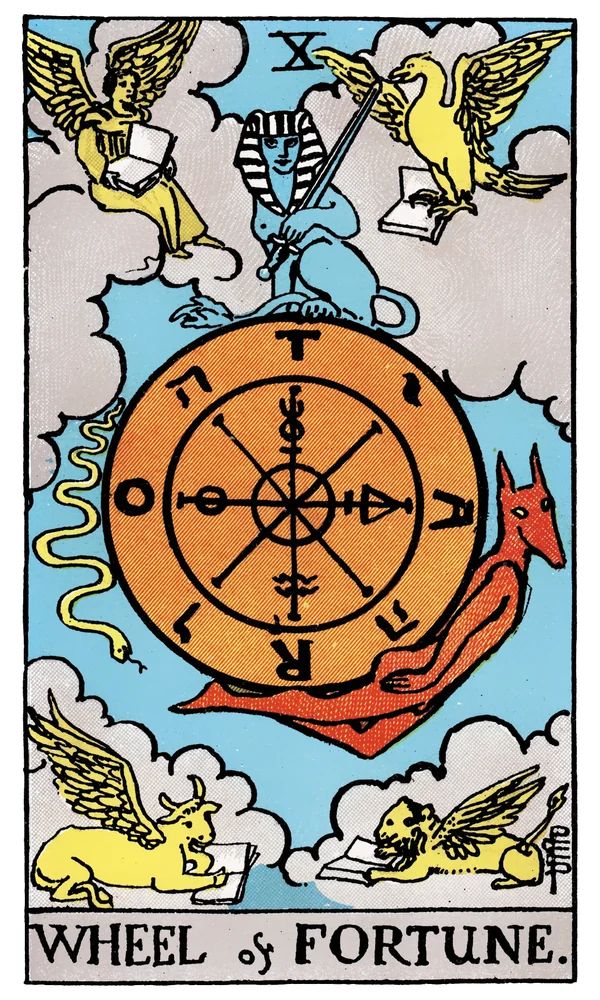 A card that often resonates with this question: Wheel of Fortune →
 How can tarot help with introspection?
Tarot has a reputation that sticks: that of a tool for prediction. We picture the fortune-teller announcing a wedding, a trip, bad news. That image exists, but it misses the deepest and most useful use of tarot: a support for understanding yourself better.
A drawn card has no magical power. What it has is a strong image, loaded with symbols, that speaks directly to a part of you that doesn't express itself in words. When you look at a card, you project onto it what is already inside you: your fears, your desires, what you know without being able to say it. The card does not reveal a future, it makes your inner present visible.
This introspective approach changes everything. You no longer ask "what is going to happen", but "what is happening in me right now". The question is no longer predictive, it becomes exploratory. What is this image telling me? Why does this one move me more than the others? What couldn't I put into words before seeing it?
This is the path MindTarot follows. Tarot becomes a trigger for reflection, a starting point to explore an intention, an emotion, a question moving through you. You are not waiting for a verdict, you are seeking to know yourself better. And the cards, in this posture, are strikingly accurate: not because they know something you don't, but because they help you hear what you already knew, without admitting it to yourself.
Going further
These reflections do not replace professional support if you are going through serious distress. They invite you to observe what is happening inside you, without judging yourself, with curiosity. Tarot is a support: what matters is the encounter with yourself.
- All tarot cards and their meanings
- Frequently asked questions about MindTarot
- Discover the MindTarot app
Last updated: April 28, 2026
← Back to home
How do I let go?
Letting go is not giving up. It is more of an invitation to stop trying to control everything, when so much is beyond your power. What we hold onto most tightly is often our fears: fear of losing, fear of not being good enough, fear of not knowing what comes next.
Letting go starts with noticing what you are holding. A situation, an expectation, an image of yourself you would like to preserve at all costs. Ask yourself: if I no longer had to control this moment, what could I feel differently? Relief rarely comes from a battle won. More often, it comes from realizing there was no battle to fight.
You don't need to understand everything right now. You can simply welcome what you are living today, without judging it, without forcing it. The tarot can support this work: the card of The Hanged Man, for example, evokes that voluntary suspension, that moment when you accept stillness in order to see more clearly.